Your bathroom vanity gets used every day: toothpaste, makeup, hair products, hot styling tools and constant water. The right countertop will look great for decades. The wrong one can stain, etch or swell within a few years.
The good news is that bathroom vanity countertops in Montreal cost far less than a kitchen, because the surface is small. That means you can often afford a premium stone in the bathroom that would stretch the budget in a kitchen.
This guide compares quartz, granite, marble and quartzite for vanities. It also explains standard sizes and sink options, and shares money-saving tips for Montreal homeowners.

Quartz vs Granite vs Marble for Bathroom Vanities
Quick comparison:
- Quartz: excellent water and stain resistance, no sealing, not affected by acidic products. Best for busy family bathrooms.
- Granite: very good resistance once sealed, with unique natural patterns. Best for natural stone lovers who want durability.
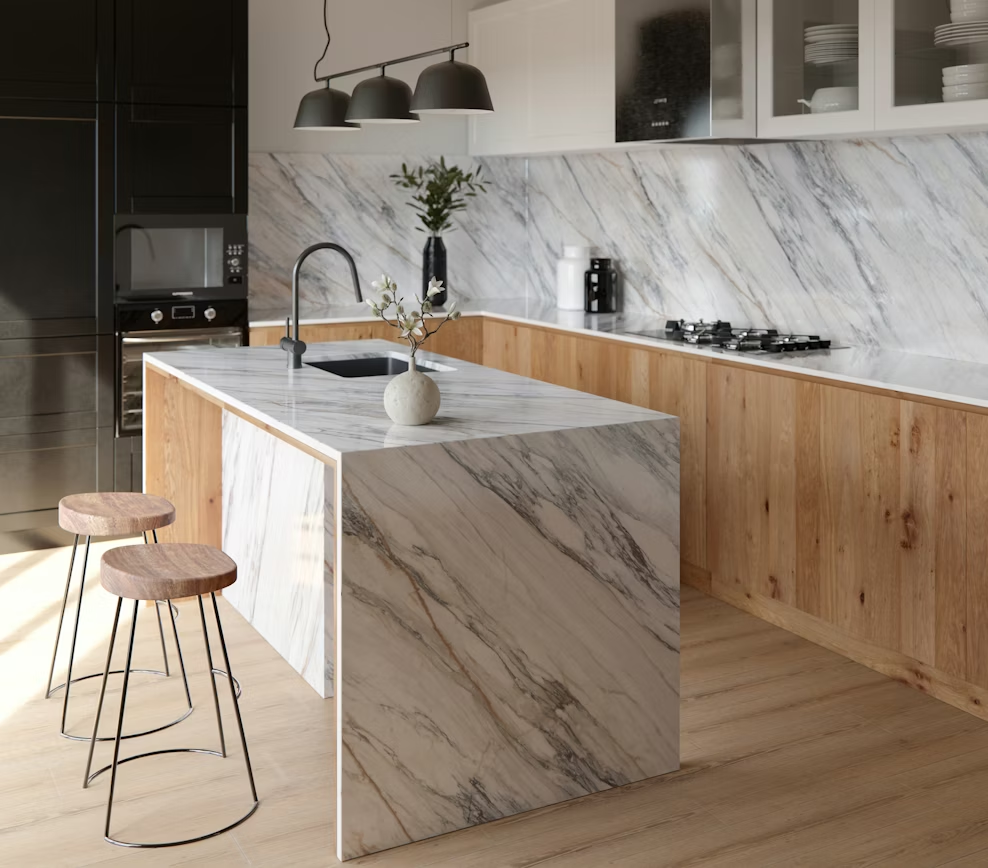
- Marble: classic, luxurious veining, but it needs regular sealing and can etch. Best for primary suites and powder rooms.
- Quartzite: the look of marble with much more strength, though it needs periodic sealing. Best for luxury with lower maintenance.
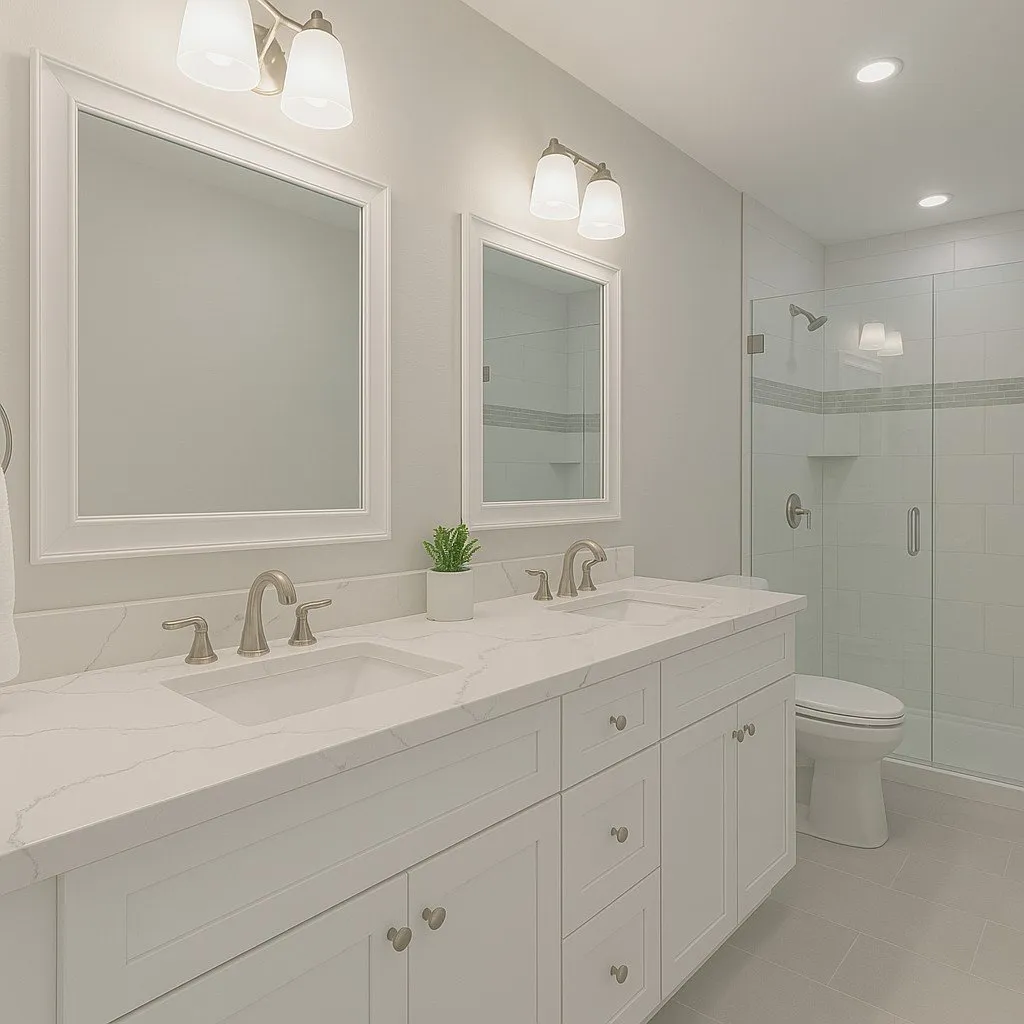
Quartz is the most popular choice for Montreal bathrooms. It is non-porous, so water, soap, makeup and hair dye wipe right off, and it never needs sealing. Just avoid setting hot curling irons or flat irons directly on it.
Granite brings natural, one-of-a-kind patterns and handles heat and daily use very well. Once sealed, it resists water and stains in a bathroom.
Marble is timeless and elegant, especially in a primary bathroom or powder room. It is softer and can etch from acidic products like some cleaners, perfumes and mouthwash. It suits homeowners who are happy with a lived-in patina.
Quartzite offers the look of marble with much better durability. It is a great upgrade if you love white veined stone but want less worry.
Comparing materials for your kitchen as well? See our [Granite vs Quartz Countertops Montreal guide] and our [Natural Stone Countertops buyer’s guide].
Standard Bathroom Vanity Countertop Sizes
A vanity top is usually about 1 inch wider than the cabinet and about 22 inches deep. Here is roughly how much stone common sizes need:
- 30 in. vanity (single sink): top about 31 x 22 in., roughly 4.7 sq. ft. of stone
- 36 in. vanity (single sink): top about 37 x 22 in., roughly 5.7 sq. ft.
- 48 in. vanity (single or double sink): top about 49 x 22 in., roughly 7.5 sq. ft.
- 60 in. vanity (double sink): top about 61 x 22 in., roughly 9.3 sq. ft.
- 72 in. vanity (double sink): top about 73 x 22 in., roughly 11.2 sq. ft.
Older Montreal homes, plexes and condos often have tight or uneven bathrooms. A custom vanity top cut to your exact measurements fits odd widths, angled walls and corner vanities that store-bought tops cannot.
Most vanity tops use 2 cm stone, which is lighter and more affordable than the 3 cm stone usually used in kitchens.

Choosing Your Sink and Faucet
- Undermount sink: mounted under the stone for a seamless look and easy wiping. This is the most popular choice with quartz and granite.
- Vessel sink: sits on top of the counter for a bold, modern style.
- Double sinks: ideal for shared primary bathrooms. Plan for a vanity of at least 60 in.
- Faucet holes: single-hole, 4 in. centerset or 8 in. widespread. Choose your faucet before your countertop is measured, so the holes are drilled in the right place.
Backsplash and Edge Options
A matching 4 in. stone backsplash protects the wall from splashes and is a popular, budget-friendly finish. For a high-end look, the stone can run full height behind the vanity. Simple eased or bevelled edges suit modern bathrooms, while an ogee edge adds a classic touch.
How Much Do Bathroom Vanity Countertops Cost in Montreal?
Because a vanity top covers only about 5 to 11 sq. ft., it costs a fraction of a kitchen project. The final price depends on:
- The material (quartz, granite, marble or quartzite) and the colour you choose
- The size, thickness and edge profile
- Sink cutouts, faucet holes and backsplash pieces
- Removal of an old vanity top, if needed
Money-saving tip: ask about countertop remnants. These are premium leftover pieces from larger slabs, and they are often the perfect size for a vanity. You get high-end stone at a lower price.
For detailed pricing by material, see our [How Much Do Kitchen Countertops Cost in Montreal in 2026?] guide.
Caring for Your Vanity Countertop
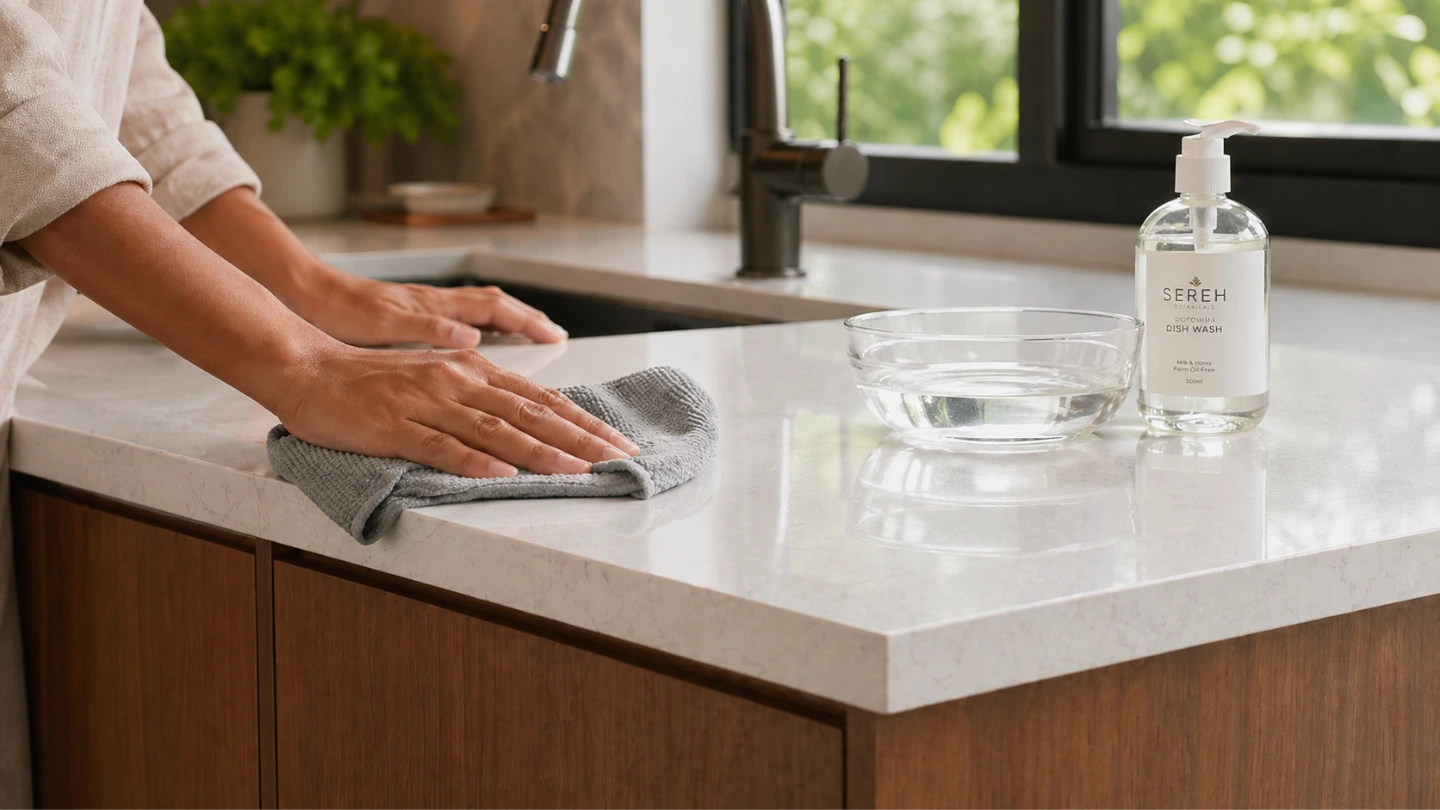
Wipe it daily with warm water and mild dish soap. Avoid bleach and abrasive powders. Wipe up hair dye, nail polish remover and perfume quickly, especially on marble. For the full routine, read our [How to Clean & Maintain Granite, Quartz, and Marble Countertops] guide.
Frequently Asked Questions
What is the best countertop material for a bathroom vanity?
Quartz is the best all-round choice for most bathrooms. It is non-porous, never needs sealing and resists stains from makeup and toiletries. Granite is the best natural stone option.
Is marble a good choice for a bathroom vanity?
Yes, if you accept some maintenance. Marble needs regular sealing and can etch from acidic products, but it works beautifully in primary bathrooms and powder rooms.
How thick should a bathroom vanity countertop be?
2 cm is standard for most vanities. 3 cm gives a heavier, more luxurious look.
Can I replace only my vanity countertop and keep the cabinet?
Yes. As long as the cabinet is solid and level, a new stone top can be measured and installed on your existing vanity.
How long does a vanity countertop installation take?
The installation itself usually takes a few hours. Learn more in our [Countertop Installation in Montreal] guide.
Get a Custom Vanity Countertop in Montreal
Whether you are renovating a primary suite, a family bathroom or a small powder room, Crown Granite can help you choose the right stone and create a vanity top that fits perfectly.
Contact Crown Granite today for a free quote, or visit our showroom to see quartz, granite, marble and quartzite in person, including remnants ideal for bathroom vanities.