How to Clean and Maintain Your Countertops: A Montreal Homeowner’s Complete Care Guide
You’ve invested in a beautiful new countertop — now what? At Crown Granite, we’ve fabricated and installed granite, quartz, and marble surfaces for Montreal homeowners for over 20 years, and one question comes up again and again: “What’s the best way to keep this looking brand new?”
The good news is that daily care takes only a minute or two, and it’s the difference between a countertop that looks stunning after 15 years and one that shows dull spots, etching, or stains within a few. Here’s exactly how to care for the three most popular countertop materials we install across Montreal, the West Island, TMR, and Dorval.
Why Maintenance Matters More Than People Think
Every stone and engineered surface has a different level of porosity, hardness, and chemical sensitivity. Using the wrong cleaner — even a common household product like vinegar or bleach — can dull the finish, etch the surface, or void your warranty. Since Crown Granite backs our installations with 25-year to lifetime warranties, we want every customer to know the simple habits that protect that investment.
Daily Care: The 2-Minute Habit
Regardless of material, these basics apply to every countertop in your kitchen or bathroom:
- Wipe up spills immediately, especially acidic liquids like wine, citrus juice, coffee, and tomato sauce.
- Use a soft cloth or non-abrasive sponge — never steel wool or scouring pads.
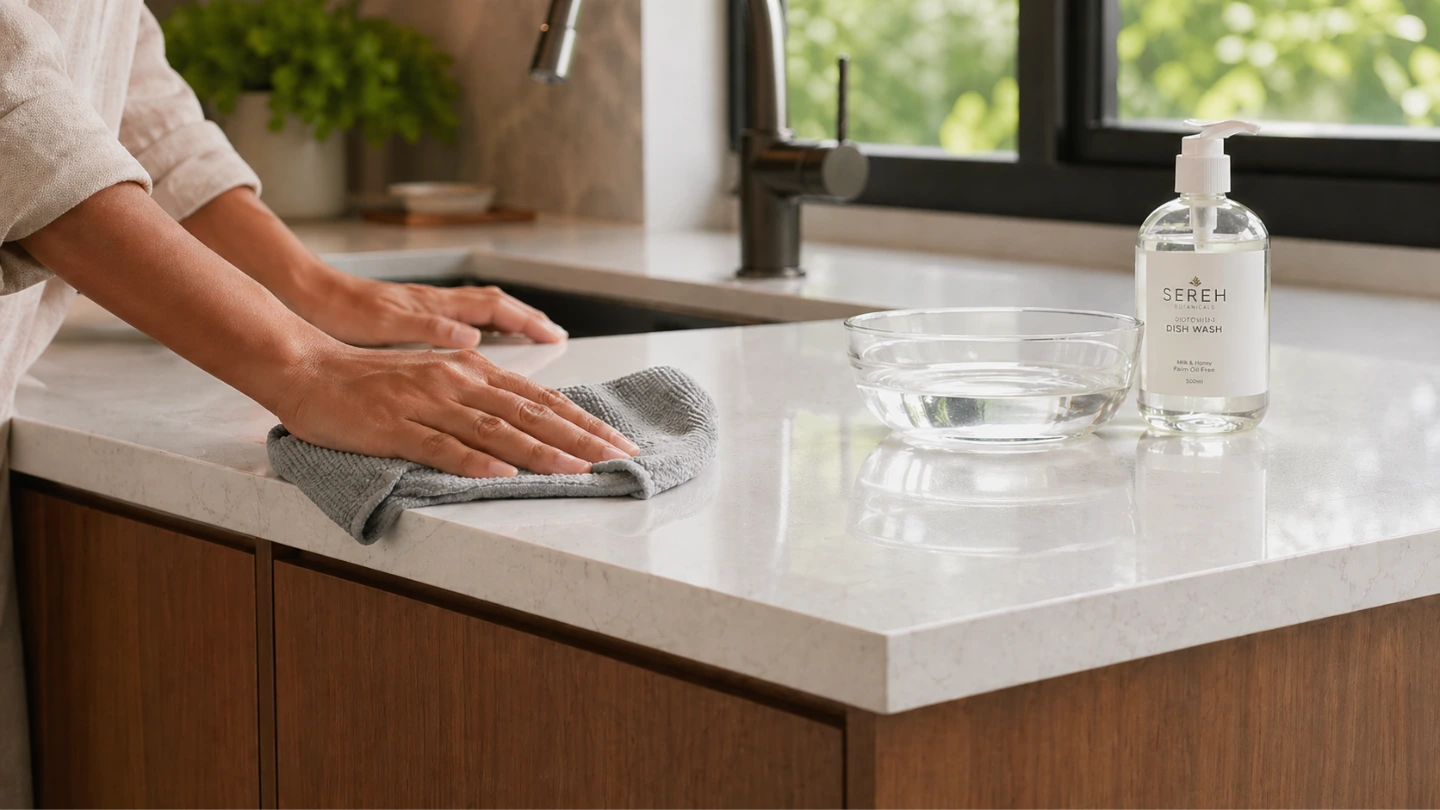
- Clean with warm water and a few drops of mild dish soap for everyday messes.
- Avoid cutting directly on the surface; always use a cutting board to prevent dulling your knives and scratching the finish.
- Use trivets or hot pads under pots and pans, even on heat-resistant materials, to prevent thermal shock over time.
Caring for Granite Countertops
Granite is a natural stone that’s tough but porous, which means it needs periodic sealing to stay stain-resistant.
Daily cleaning: Warm water with a pH-neutral stone cleaner or a drop of dish soap. Dry with a soft cloth to prevent water spots.
What to avoid: Never use vinegar, lemon, ammonia, or bleach-based cleaners — these acidic or alkaline products break down the sealant and can dull the natural shine over time.
Sealing: Most granite countertops need resealing every 1 to 3 years, depending on the stone’s porosity and how much the surface is used. A simple test: drop a few beads of water on the counter. If it beads up, you’re still protected. If it soaks in within a few minutes, it’s time to reseal.
Stain removal: For stubborn stains, a baking soda and water poultice left overnight can lift oil or discoloration without damaging the stone.
Caring for Quartz Countertops
Quartz is engineered stone — a blend of natural quartz crystals and resin — which makes it non-porous and one of the lowest-maintenance surfaces available. This is one of the biggest reasons Montreal homeowners choose it, as we cover in our Granite vs Quartz guide.
Daily cleaning: Warm, soapy water is all you need. Because quartz doesn’t absorb liquids, there’s no staining risk from everyday spills.
No sealing required: Unlike granite or marble, quartz never needs to be sealed — a major time and cost saver over the life of the countertop.
What to avoid: Quartz resin is sensitive to high heat and strong chemicals. Avoid placing hot pans directly on the surface and steer clear of oven cleaners, paint removers, or anything with high pH or bleach concentration, which can discolor the resin over time.
Sun exposure: If you’re considering quartz for an outdoor kitchen or a sunroom, know that prolonged UV exposure can cause slight yellowing in some quartz colours. For sun-exposed applications, we typically recommend granite, porcelain, or sintered stone instead.
Caring for Marble Countertops
Marble is prized for its timeless veining and soft, luxurious look, but it’s the most delicate of the three materials and needs the most attentive care.
Daily cleaning: Use only pH-neutral, marble-specific cleaners. Wipe spills — especially wine, coffee, and citrus — within seconds, as marble etches (develops dull, matte spots) on contact with acid.
Sealing: Marble should be sealed at installation and resealed roughly every 6 to 12 months, more often in high-use kitchens.
Etching vs. staining: It’s important to know the difference. Etching is a chemical reaction that dulls the polish and cannot be cleaned away — it needs to be professionally re-polished. Staining is a colour change that can often be lifted with a poultice. If your marble already shows etching, ask our team about honing and repolishing services.
Best use cases: Because of its sensitivity, many of our clients reserve marble for bathroom vanities, fireplace surrounds, or lower-traffic areas, while choosing quartz or granite for busy kitchen prep zones.
Quick Reference: Cleaning Products to Avoid on Any Natural Stone
- Vinegar, lemon juice, or any acidic cleaner
- Bleach or ammonia-based products
- Abrasive powders or scouring pads
- Generic all-purpose sprays not labeled “stone safe”
Seasonal Maintenance Checklist
Monthly: Do the water-bead test on granite and marble to check seal integrity.
Every 6 months: Deep clean grout lines around integrated sinks and backsplashes; inspect for any chips near the sink cutout or edges.
Yearly: Reseal granite (if the water test shows absorption) and schedule marble resealing if your household uses the kitchen heavily.
As needed: Contact a professional for polishing, chip repair, or seam maintenance rather than attempting DIY fixes, which can worsen damage on natural stone.
When to Call in the Professionals
Some issues are beyond home remedies — deep stains, chips near a sink cutout, seam separation, or dulled marble that needs repolishing. Attempting aggressive DIY fixes on natural stone can sometimes cause more harm than good.
At Crown Granite, our team doesn’t just fabricate and install countertops — we’re happy to advise existing customers on the right sealants, cleaning products, and repair options for their specific stone. If your countertop was installed by us, our knowledge of the exact slab and finish makes troubleshooting even easier.
Protect Your Investment
Whether you have granite, quartz, or marble, a few smart daily habits and a simple annual maintenance routine will keep your countertops looking showroom-fresh for decades. If you’re not sure what material is currently in your kitchen, or you’re ready to upgrade to something lower-maintenance, our team at Crown Granite is here to help.
📞 Call or text: (514) 538-4343 📧 Email: info@crowngranite.ca 📍 Showrooms in Dorval and Town of Mont-Royal (TMR), serving Montreal and surrounding Quebec areas.
Get Your Free Countertop Quote — our experts will help you choose the surface that fits your lifestyle and your maintenance comfort level.
Frequently Asked Questions
How often should I seal my granite countertop? Most granite needs resealing every 1 to 3 years. Test by dropping water on the surface — if it doesn’t bead up within a few minutes, it’s time to reseal.
Can I use vinegar to clean my countertops? No. Vinegar is acidic and will etch or dull granite and marble over time. Stick to pH-neutral, stone-safe cleaners or mild dish soap.
Do quartz countertops need to be sealed? No. Quartz is non-porous and engineered with resin, so it never requires sealing — one of the reasons it’s so popular for low-maintenance kitchens.
What’s the difference between etching and staining on marble? Etching is a chemical burn that dulls the polish and requires professional repolishing. Staining is a colour change that can often be removed with a baking-soda poultice.
Is quartz a good choice for outdoor countertops? Not usually. Prolonged UV exposure can yellow certain quartz colours. Granite, porcelain, or sintered stone are better suited for outdoor or sun-exposed applications.